Carbon below,
life above.
Zambia's first circular carbon soil input: a stable, carbon-rich material made from local crop residues that unlocks soil potential, sequesters carbon for centuries, and builds resilient farms.
So, what exactly
is biochar?
Biochar is a stable, carbon-rich material produced by heating biomass (agricultural waste, wood chips and crop residues) in a low-oxygen environment through pyrolysis. Unlike regular charcoal, it is engineered for long-term soil enhancement and carbon storage that can last hundreds to thousands of years.
When biomass undergoes pyrolysis, the carbon is fixed in a stable form with unique properties, and soil enhancement is one of the most powerful. Properly used, biochar improves soil health and biology, its chemical and physical properties, and its nutrient and water retention, all of which improve crop yield.
Importantly, biochar is not a fertilizer. It's a permanent soil amendment: a one-time application that helps you use less fertilizer by holding onto nutrients that would otherwise be lost. Think of it as building the soil itself, not feeding a single crop.
From local crop residues
to permanent carbon.
Every batch starts as Zambian farm waste and ends as performance-grade carbon. Here's how residue becomes a permanent soil asset through pyrolysis.
The Pyrolysis Process
Biochar is sustainably produced from a wide range of biomass from agricultural and forestry residues. It is produced at high temperatures, ranging from 400°C to 800°C with little to no oxygen. This process is called pyrolysis, or carbonization.
When biomass undergoes pyrolysis, the carbon is fixed in a stable form with unique properties. About half of the original carbon returns to the soil instead of the atmosphere, turning local waste into a permanent asset. Every tonne of Pyro Biochar sequesters roughly 2.5 tonnes of CO₂e.
Feedstock
Farmer crop residues (maize cobs & stover, wood processing waste) are collected as local feedstock, employing Zambian crews.
Pyrolysis
Biomass is heated to 400–800°C with little to no oxygen. The carbon is fixed into a stable, highly porous structure.
Activate & Inoculate
Biochar is loaded with nutrients (activated) and beneficial microbes (inoculated) to become a soil-ready product.
Back To The Land
Biochar returns to farms, boosts yields, generates more residues: a closed loop that keeps giving season after season.
See how Pyro Biochar is made.
A short look inside the process, from raw crop residue to performance-grade Zambian carbon. Tap play whenever you're ready; the video only loads when you choose to watch.
A mixture of organic carbon
and mineral ash.
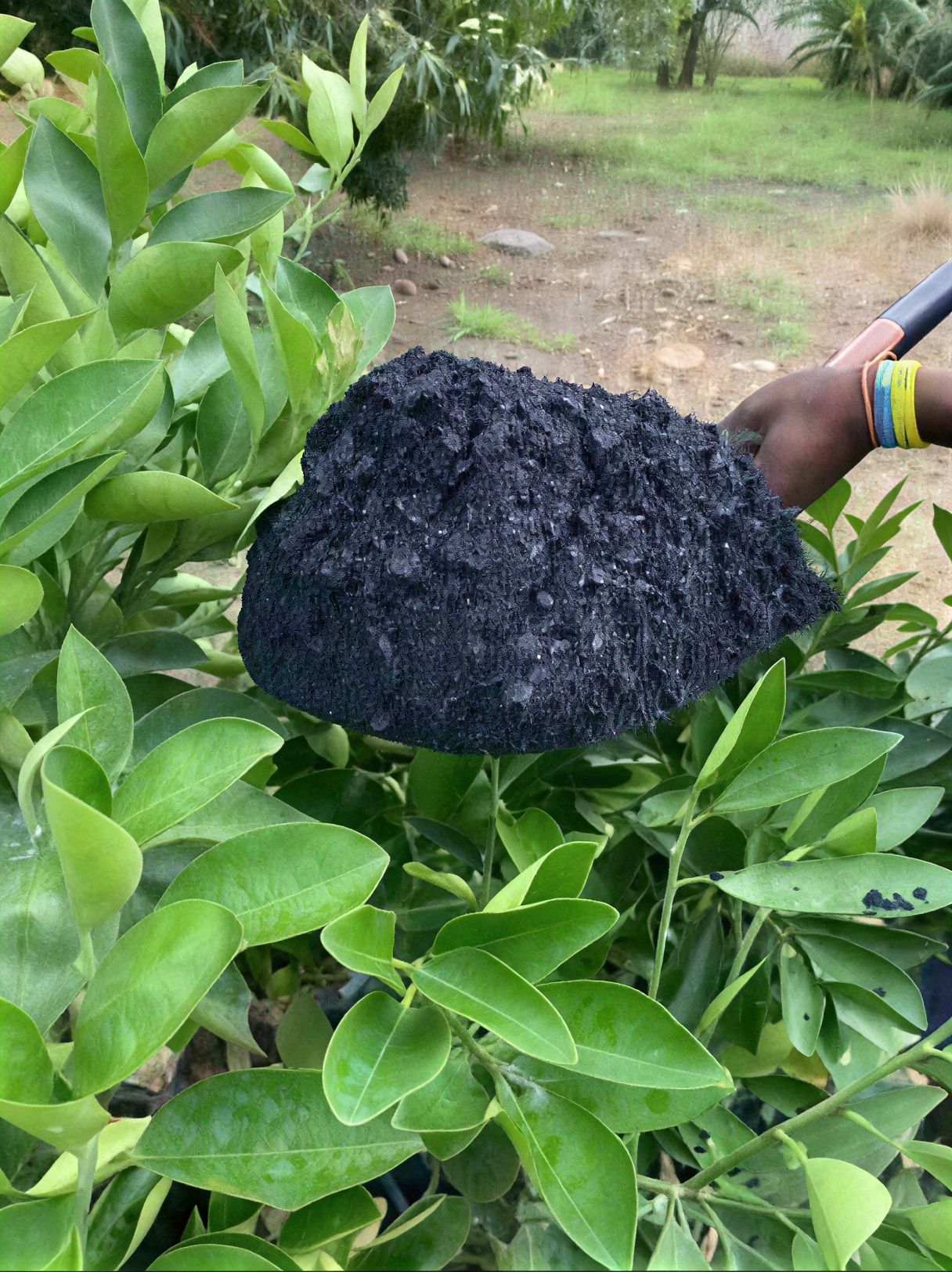
Biochar is a mixture of organic (carbon) and inorganic (mineral ash) elements. Composition varies with feedstock and operating conditions, but typical biochar contains 60–90% organic carbon, with small amounts of oxygen, hydrogen, nitrogen, sulfur and inorganic minerals.
Pyro Biochar: General Specifications
- Carbon content (C)>70% (stable)
- Surface area300–400 m²/g
- Water holding capacity (WHC <2mm)106.2%
- H/Corg ratio0.37
- pH value8–9
- Moisture content<10%
- Particle size0.5–5 mm
- Carbon sequestration~2.5 t CO₂e / tonne
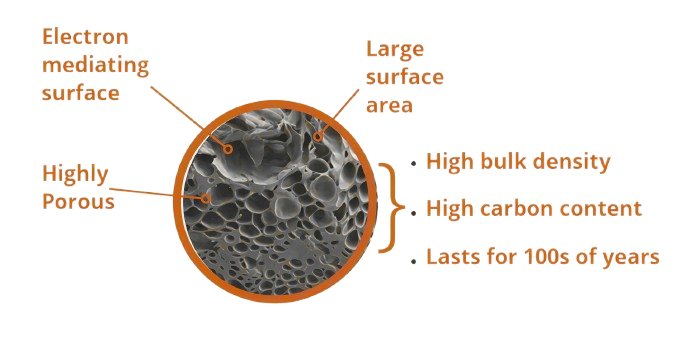
Why The Structure Matters
Highly Porous
A vast internal network of micropores stores water and nutrients and provides protective habitat for beneficial soil microbes.
Large Surface Area
At 300–400 m²/g, a single gram carries a surface area on the scale of a football field, the engine behind its retention capacity.
Electron-Mediating Surface
Reactive surface chemistry lets biochar exchange ions and hold onto nutrients, releasing them to plants on demand.
High Carbon Content & Bulk Density
Recalcitrant carbon that does not decompose, stable in soil for hundreds of years. One application, a lifetime of value.
One input. Better fertility,
efficiency and resilience.
Your customers face degraded soils, rising input costs and climate pressure. Pyro Biochar is a single solution that improves fertility, enhances fertilizer efficiency, locks carbon for centuries, and turns local waste into value.

Water & Nutrient Retention
Improves water and nutrient retention, up to a 20–30% reduction in irrigation and fertilizer needs.

Higher Crop Yields
Boosts crop yields, a 10–42% increase in many studies, especially in degraded soils.
Microbial Activity
Enhances microbial activity and root growth, improving root structure and nutrient uptake.

Nutrient Use Efficiency
Raises soil pH, reduces nutrient leaching and improves Nitrogen Use Efficiency (NUE).
Environmental Impact
Long-Term Carbon Sequestration
Stable carbon locked away for hundreds of years, roughly 2.5 t CO₂e captured for every tonne of biochar.
Reduces Soil Greenhouse Gas Emissions
Cuts emissions from soils while reducing dependence on petroleum and natural-gas-based fertilizers.
Binds Pollutants & Heavy Metals
Immobilises pollutants and heavy metals in the soil for land remediation.
Circular Economy In Action
Local Waste → Local Jobs
Farmer residues become feedstock. Processing employs Zambian crews.
Closed Loop
Biochar returns to farms, boosts yields, creates more residues, and more biochar.
No Imported Inputs
Entirely Zambian raw materials and labour: a local supply chain with no import delays.
We don't deal in theory.
We deal in data.
High-quality Zambian biochar,
built for your system.
Three biochar product lines, each designed for a specific entry point into your farming system.

Raw / Virgin Biochar
Pure, activated biochar produced via high-temperature pyrolysis (600°C) from Zambian agricultural residues: maize cobs, rice husks, poultry litter. No inoculants. No amendments. Just performance-grade carbon.
For: Fertilizer blenders, large-scale agribusinesses, technical farmers
Get a Quote →
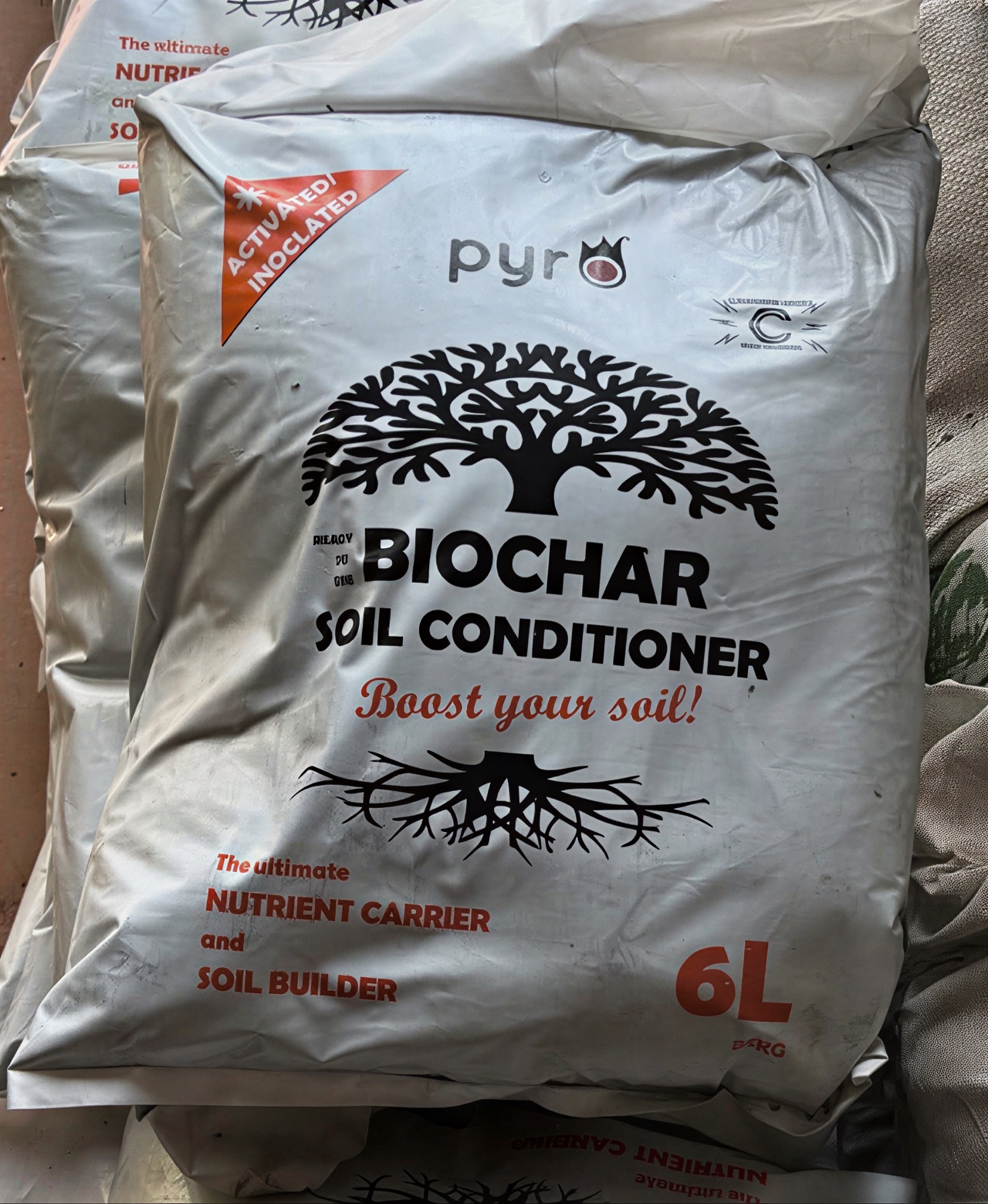
Activated & Inoculated Biochar
Our soil ready solution. Pre-activated (filled with nutrients) and inoculated (loaded with healthy microbes). Apply directly to the furrow, planting hole or seedling sockets. No lag phase. No guesswork.
For: Horticulture, vegetables, tobacco, high-value row crops, nurseries and agroforestry
Get a Quote →
Pyro Black Urea™
A revolutionary product that solves agriculture's most persistent problem: nitrogen loss. We don't coat urea with biochar: we mechanically fuse them through a proprietary pelleting process. The nitrogen is not on the surface; it is integrated throughout the biochar matrix.
For: Large-scale maize, wheat, soybean, and cotton farmers
Get a Quote →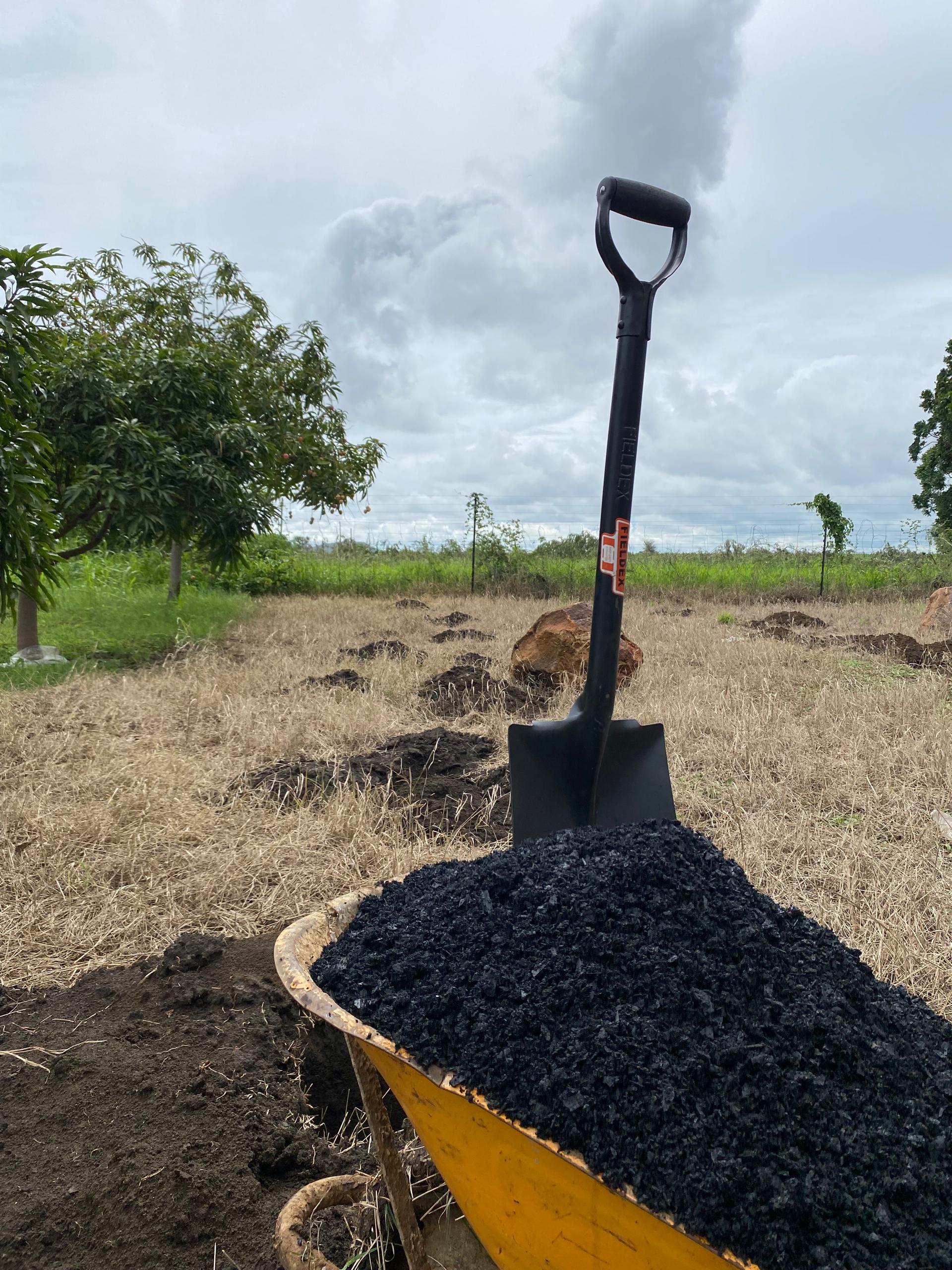
Wake up your soil.
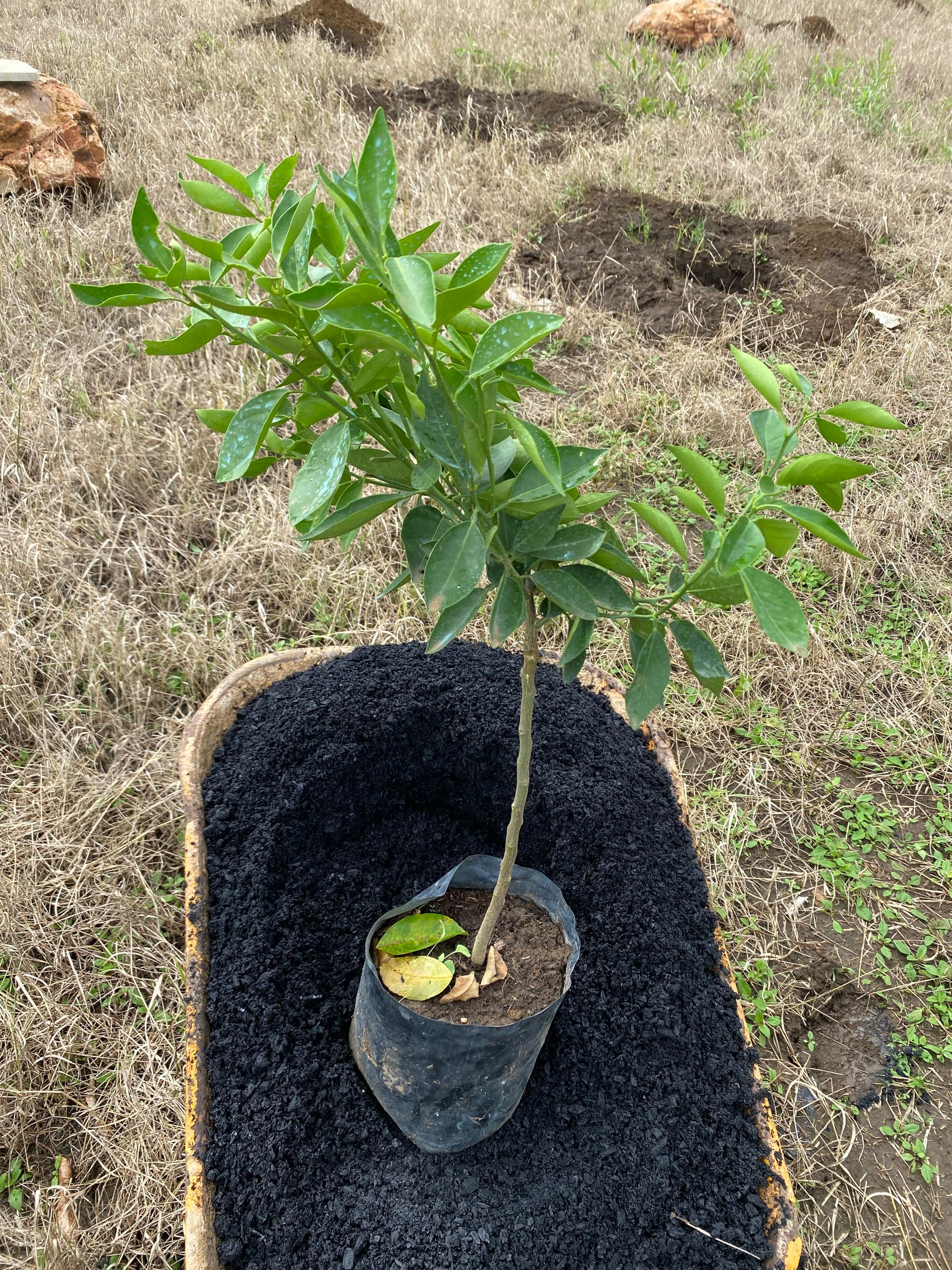
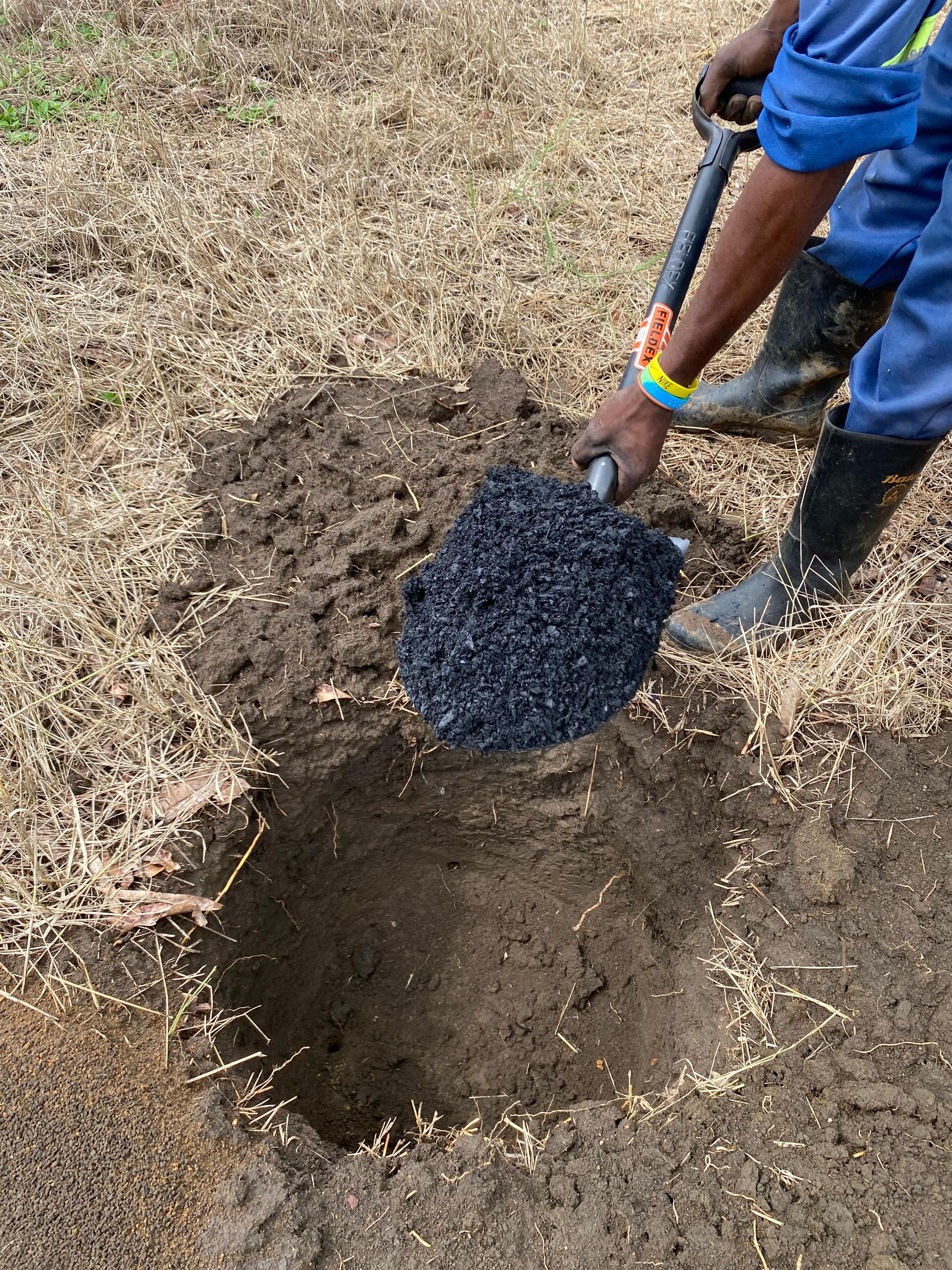
Pyro Biochar is a permanent soil amendment: a one-time application with no need for future inputs, as biochar-enhanced soils retain fertility for thousands of years. It can be applied at any time of the year, dug into the soil surface or mixed with soil ‘backfill’ when planting.
1. Altering Soils
To change the basic nature of your soil dramatically, or when making soils from scratch (e.g. composting). You'll need higher volumes of biochar in these cases.
2. Amending Soils
To add fertility per crop or per season to an existing garden or planting, or to inoculate healthy soil microorganisms back into your garden. In these cases you need less biochar.
Choose your goal and coverage, then match your ambition: minimalist, middle of the road, or enthusiast.
| Goal | Coverage | Minimalist | Middle Of The Road | Enthusiast |
|---|---|---|---|---|
| Altering: making or dramatically changing soil | ||||
| Altering | 20 m² | 5 × 50 kg bags | 7 × 50 kg bags | 9 × 50 kg bags |
| Altering | 1 hectare | 125 tons | 175 tons | 225 tons |
| Amending: adding fertility to existing soil | ||||
| Amending | 20 m² | 1 × 50 kg bag | 2 × 50 kg bags | 3 × 50 kg bags |
| Amending | 1 hectare | 25 tons | 50 tons | 75 tons |
All quantities in Pyro Biochar. Reference: 2.5 kg (3 L) of Pyro Biochar covers 1 square metre.
Biochar, answered.
- improve root structure and growth
- increase plant nutrient uptake
- increase yield and resiliency to weather
- increase available water by widening the range between wilting point and soil saturation
- create healthier plants for fighting pests and diseases
Stop mining your soil.
Start building it.
Whether you're a fertilizer blender after bulk raw carbon, a commercial farmer ready to try activated biochar, or simply curious how biochar can cut your input costs, talk to us.